01
Feed
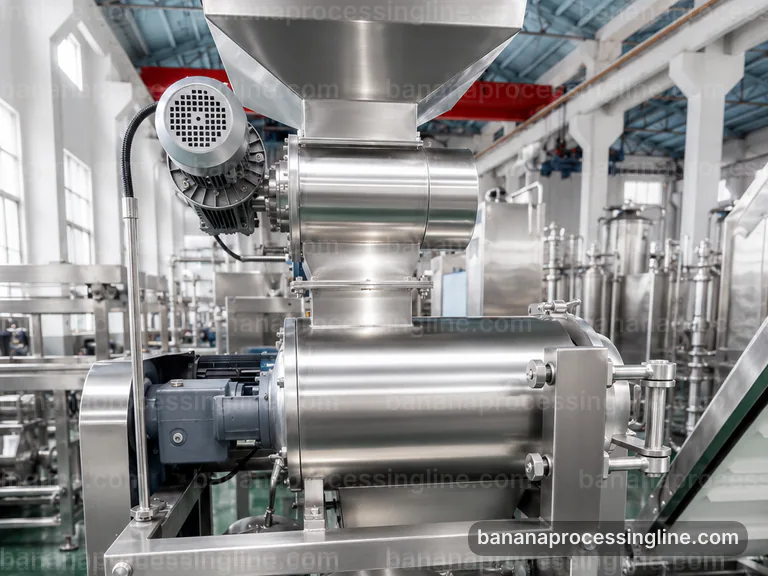
Flesh enters through a hopper or flanged inlet. The feed rate and consistency determine how much work the rotor sees. A surge can overload the chamber; starvation can cause the rotor to run without enough product, which may increase air entrainment or temperature.
02
Rotor and working zone
A rotating element moves the flesh against a screen or stator. The clearance, speed and element shape determine the mechanical work. More work can reduce particle size, but it can also heat the product and change its handling.
03
Screen and discharge
Pulp passes through the screen openings; coarse material is retained and leaves through a separate path or is worked further. The screen aperture and open area affect flow, pressure and texture. A blocked screen changes the whole machine behaviour.
04
What changes the result
Feed condition, rotor speed, screen choice, clearance and flow rate all interact. A trial should change one variable at a time where possible and measure the output with the same method.
| Machine element | Function | Selection effect |
|---|---|---|
| Inlet/hopper | Present flesh to the rotor | Feed stability and air exposure |
| Rotor | Apply mechanical work | Texture, temperature rise, throughput |
| Screen/stator | Control outlet and retained material | Particle size, recovery, pressure |
| Discharge | Move pulp to the next stage | Pump suction and line pressure |
| Drive | Provide torque and speed | Turndown, start-up and overload |
Before you enquire
Practical questions
Does higher rotor speed make better puree?
Not necessarily. More speed can reduce particle size but may increase temperature, air entrainment and wear. The right speed is established with the product and screen.
What happens if the screen blocks?
Flow falls, pressure and temperature may rise, and the product can be overworked. The machine needs a safe clearing procedure and a maintenance plan.
These notes are a project-preparation framework, not a validated operating procedure or a performance guarantee.
Next step
Put the product in the brief.
Share the actual feed, texture target and measurement point. The equipment discussion becomes much more useful.