01
The sterile boundary
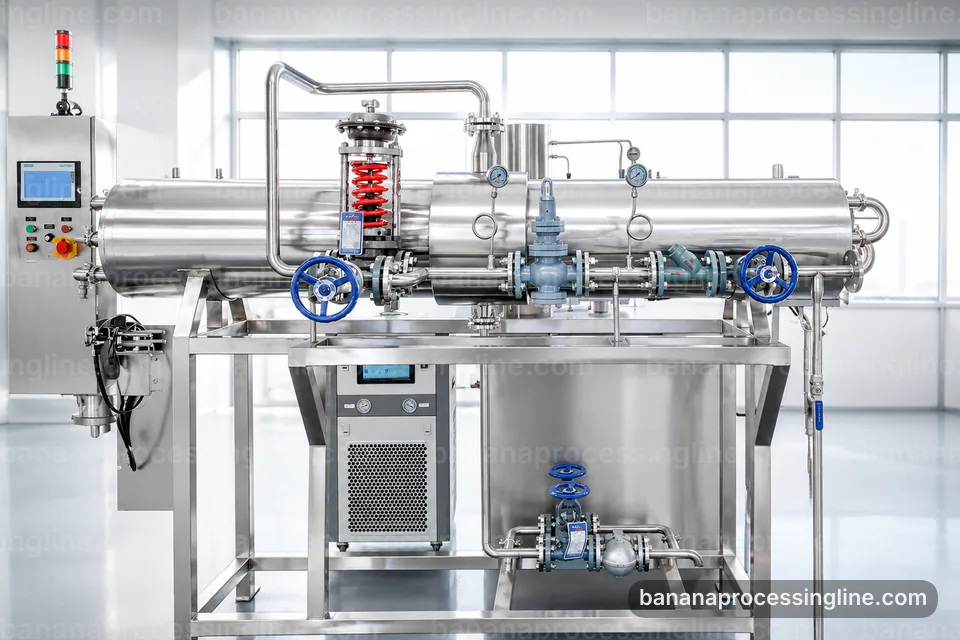
Treated product must be protected from non-sterile surfaces, air and packaging. The transfer line, filler and package entry form a boundary that needs sterilization and monitoring.
02
The package
Bag, fitment, film, drum and closure all need a compatible sterilization method and integrity check. A filler that cannot handle the actual package is not a solution.
03
The filling operation
Fill mass, cycle time, closure and package handling are part of the equipment. Start-up, stops and interventions need a defined recovery procedure.
04
Validation
Validation covers the product process, equipment, package and filling operation. A machine certificate or a single test run is not a shelf-life guarantee.
| System element | What to define | Evidence |
|---|---|---|
| Upstream process | Validated time/temperature and flow | Process authority records |
| Sterile transfer | Boundary, sterilization, monitoring | Validation records |
| Package | Material, fitment, closure, sterilization | Package specification and integrity test |
| Filler | Fill mass, cycle, interventions | Factory and site acceptance tests |
| Storage | Temperature and distribution | Shelf-life and stability study |
Before you enquire
Practical questions
Can I use a standard bulk filler for aseptic bags?
Only if the filler and package handling are designed for the sterile boundary. A standard hygienic filler is not aseptic by default.
What is the first step?
Define the product, process and package. Then assess the filler and the sterile boundary as one system. Starting with a machine price usually leads to a gap later.
These notes are a project-preparation framework, not a validated operating procedure or a performance guarantee.
Next step
Put the product in the brief.
Share the actual feed, texture target and measurement point. The equipment discussion becomes much more useful.